Europe's energy map is being redrawn. And this time, the lines run through the Black Sea.
In January 2025, Russian gas transit through Ukraine came to a permanent halt. A sixty-year-old supply route, gone overnight. The EU is now phasing out all remaining Russian gas imports by 2027, with bans on short-term Russian LNG contracts already taking effect this month. At the same time, the Iran crisis has sent oil prices above $100 a barrel, squeezing an already tight market. Hungary, Slovakia and Austria, once heavily reliant on Russian pipeline gas, are scrambling for alternatives. And Europe as a whole is asking a simple question: where will the gas come from?
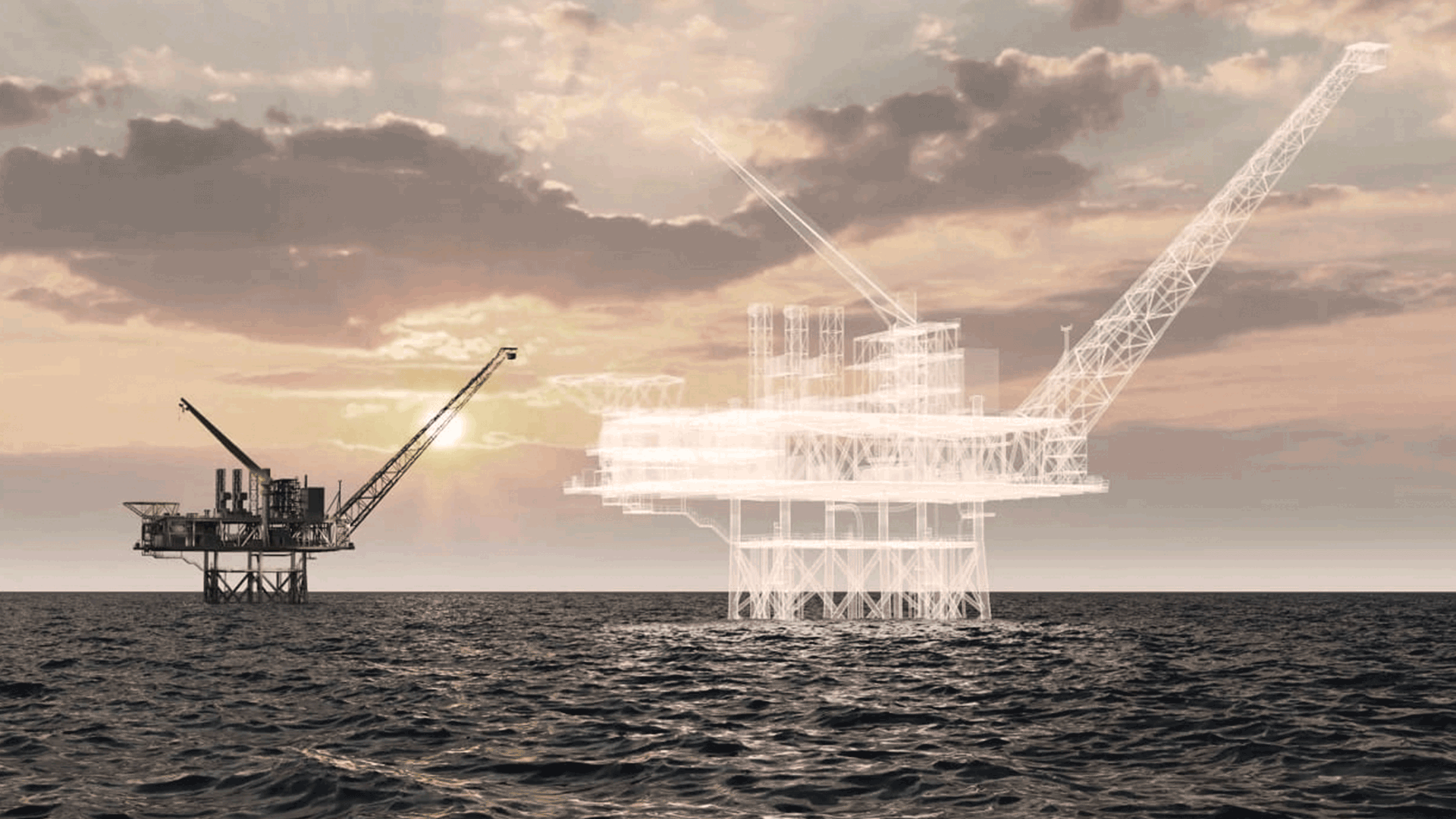
One answer sits about 160 km off the Romanian coast, deep under the Black Sea.
Neptun Deep: The Biggest Gas Project in the EU
The Neptun Deep project is the largest offshore gas development in the European Union. Two companies share it equally: OMV Petrom, the biggest integrated energy producer in Southeast Europe, and Romgaz, Romania's largest natural gas producer and supplier. Each holds a 50% stake.
The numbers are impressive. Up to EUR 4 billion in total investment. Around 100 billion cubic meters of recoverable gas. Annual production of roughly 8 billion cubic meters once plateau is reached. That is enough to cover the needs of about 4.3 million Romanian households, thirty times over. According to Romania's energy minister, the project is running ahead of schedule and first gas could flow in the first half of 2027.
Once the gas reaches shore, the new Tuzla-Podisor pipeline connects to the BRUA corridor (Bulgaria, Romania, Hungary, Austria). Romania is also expanding interconnection capacity with Bulgaria, Hungary and Serbia, and considering an LNG terminal on the Black Sea coast by 2028. Once Neptun Deep is online, Romania becomes the EU's largest gas producer, giving the country and its neighbours a domestic alternative to Russian imports at exactly the moment the continent needs it most. The project is estimated to bring around EUR 20 billion in revenues to the Romanian state budget over its lifetime.
Why Romania for Investors?
For investors exploring this region for the first time, Romania offers a combination worth considering. The country has been an EU member since 2007, sits at a strategic crossroads between Central Europe, the Black Sea and the Western Balkans, and has one of the lowest corporate tax rates in the EU.
Romanian legislation provides national treatment for foreign investors, meaning foreign and domestic investors are treated equally. Foreign investors can establish wholly owned enterprises, repatriate 100% of after-tax profits, and freely access domestic markets.
There are nuances, of course. The energy sector has experienced frequent regulatory changes. A windfall profit tax applies to gas producers. And FDI screening rules apply for investments above EUR 2 million in strategic sectors including energy. But the overall framework has attracted significant foreign capital, including from Austria (OMV), France, Germany and the United States.
Both companies are listed on the Bucharest Stock Exchange. OMV Petrom (ticker: SNP) is majority-controlled by Austria's OMV at 51.2%, with the Romanian state holding about 20.7%. Interestingly, Romanian shareholders overall hold over 43% of the shares, including nearly 500,000 individual investors and pension funds. Romgaz (ticker: SNG) is roughly 70% state-owned.
The Two Companies: A Quick Profile
OMV Petrom operates across the full energy value chain: exploration and production, a 4.5 million ton refinery, roughly 780 filling stations across four countries, and an 860 MW gas-fired power plant. Annual hydrocarbon production is approximately 38-40 million barrels of oil equivalent. Founded in 1857, it is one of the oldest oil companies in the world.
Romgaz is more focused: natural gas exploration, production and supply, plus some electricity generation. The real story is Neptun Deep. For Romgaz, this project is transformational. Analysts expect it to boost gas output by about 75% and lift earnings by roughly 40% once fully online from 2028.
The Showdown: Obermatt Ranks Compared
How do these two compare through the Obermatt lens? Here are the latest ranks. They shift over time, so treat this as a snapshot highlighting the structural differences.
Value: Advantage OMV Petrom
| Rank | ||
|---|---|---|
| Value Rank | ||
| Highlight: Dividend Yield |
Neither stock is cheap. But OMV Petrom has one standout metric: a Dividend Yield Rank of 83, excellent for income-focused investors. Romgaz has lowered its payout ratio to 30% of net income during the heavy Neptun Deep investment phase, compressing its yield. On valuation multiples, both look expensive relative to peers, with Romgaz's P/S Rank at just 5 suggesting the market has already priced in much of the Neptun upside. If you prioritize income, OMV Petrom wins this round.
Growth: Advantage Romgaz
| Rank | ||
|---|---|---|
| Growth Rank | ||
| Highlight: Capital Growth | ||
| Stock Returns |
This is where the gap widens. Romgaz's Growth Rank of 68 is nearly double OMV Petrom's 35. Capital Growth stands out at 84 versus 78, reflecting the scale of Romgaz's investment relative to its size. Stock Returns tell an even clearer story: 88 versus 57. The market has been rewarding Romgaz's transformation. Revenue growth is weak for both (10 and 4), reflecting energy price normalization after the 2022-2023 spike. But in terms of momentum, Romgaz has the clear edge.
Safety: Surprise Advantage Romgaz
| Rank | ||
|---|---|---|
| Safety Rank | ||
| Highlight: Liquidity | ||
| Leverage |
Despite taking on significant debt for Neptun Deep, Romgaz still holds a Safety Rank of 88, well above OMV Petrom's 59. The key is Liquidity: Romgaz scores 92, OMV Petrom just 41. OMV Petrom's Leverage Rank of 89 is excellent, reflecting the backing of parent company OMV. But Refinancing (33) and Liquidity (41) suggest some near-term balance sheet tightness. Both companies have historically scored very high on Safety, so the current figures for OMV Petrom are worth monitoring.
Sentiment: Near the Floor for Both
| Rank | ||
|---|---|---|
| Sentiment Rank | ||
| Highlight: Analyst Opinions |
Both Sentiment Ranks have collapsed from strong levels in 2023 to single digits today. Analyst opinions are near the floor for both companies. Professional analysts have turned cautious, likely reflecting lower energy price expectations and uncertainty around the investment cycle.
This is a classic contrarian setup. When sentiment is near rock bottom while fundamentals remain intact and a major project is on track, it can signal an opportunity. Whether the market is right to be cautious, or has overcorrected, is the question investors need to answer for themselves.
The Verdict
Consider Romgaz if you want exposure to the transformational upside of Neptun Deep. It has the stronger Growth Rank (68 vs. 35), superior Safety (88 vs. 59), and better Stock Returns (88 vs. 57). The trade-off is a weaker valuation profile and reduced dividends during the investment phase. Romgaz is the higher-conviction play on Romania's gas future.
Consider OMV Petrom if you prefer a diversified energy company with strong dividend income (Dividend Yield Rank 83) and the stability of OMV's majority ownership. It offers refining, retail and power generation alongside upstream exposure. Its lower ranks in Growth and Safety reflect the dynamics of a broader business, not necessarily weakness.
Both companies hold an equal stake in the same project. The question is which profile suits your investment approach: the focused gas producer betting big on transformation, or the diversified energy major with a steadier income stream.
Explore More
Curious how these stocks rank against their peers? Check out the full analysis on Obermatt: